
This article examines the transformation of the Cannes Film Festival into a multidimensional platform that increasingly integrates cinema, luxury branding, digital media, wellness culture, and influencer economies. Using the 2026 appearance of Nadezhda Grishaeva as a case study, the analysis explores the emergence of hybrid public figures operating simultaneously across sports, entrepreneurship, lifestyle branding, and digital communication.
The article argues that the globalization of wellness culture and the expansion of the attention economy have redefined the structure of symbolic capital within contemporary elite cultural events.
Introduction
Over the last decade, major international cultural events have undergone substantial structural transformation. Institutions historically associated with singular artistic domains increasingly function as cross-sector platforms integrating entertainment, luxury consumption, digital communication, and influencer marketing.
Among these institutions, the Cannes Film Festival represents one of the clearest examples of this evolution.
Traditionally centered on cinematic production and auteur culture, Cannes has progressively expanded into a global arena where visibility, narrative construction, and symbolic prestige intersect with social media influence, fashion branding, and lifestyle entrepreneurship.
Within this context, the participation of non-cinematic personalities should not be interpreted as peripheral or accidental, but rather as a reflection of broader transformations within global cultural industries.
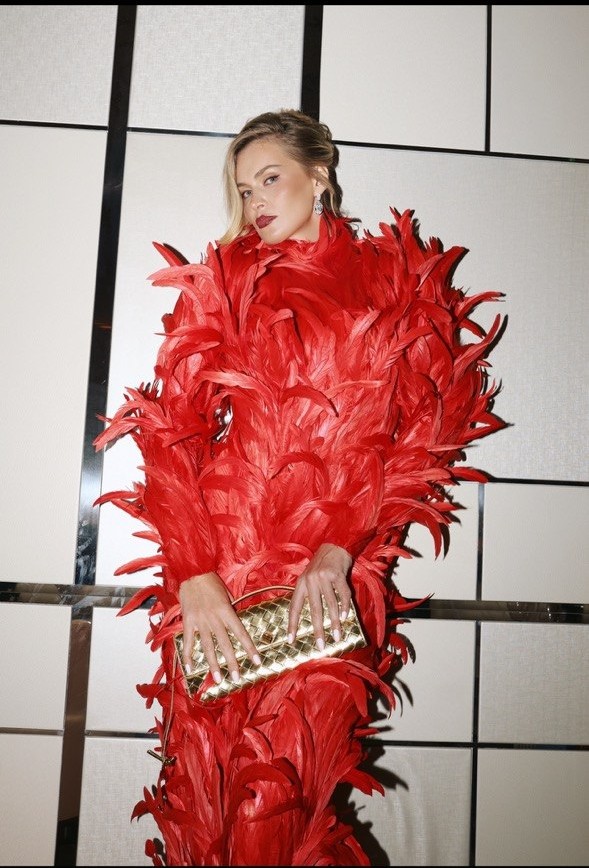
The appearance of Nadezhda Grishaeva at Cannes 2026 illustrates this phenomenon. Her presence exemplifies the growing integration of wellness entrepreneurship, elite fitness culture, luxury aesthetics, and digital influence into the symbolic ecosystem of contemporary global events.
The Transformation of Cannes as a Cultural Institution
Recent scholarship on media globalization and attention economies suggests that international festivals increasingly operate as hybrid communication platforms rather than narrowly specialized artistic forums.
Cannes now functions simultaneously as:
- A cinematic institution;
- A luxury marketing environment;
- A fashion and branding platform;
- A site of influencer visibility;
- A global social media event.
This transformation corresponds with broader developments in platform capitalism and digital audience fragmentation.
Global brands increasingly prioritize personalities capable of generating continuous transmedia engagement rather than relying exclusively on traditional celebrity structures.
Consequently, influencers, athletes, entrepreneurs, and wellness figures have become integrated into the cultural architecture of high-profile events.
The red carpet itself has evolved into a mechanism of symbolic distribution in which visibility is monetized through digital circulation, social amplification, and audience participation.
Within this framework, Cannes no longer exclusively rewards artistic achievement; it also recognizes communicative reach and lifestyle influence.
From Professional Sport to Lifestyle Entrepreneurship
Nadezhda Grishaeva’s trajectory reflects the broader diversification of post-athletic careers in the digital era.
Before entering entrepreneurship, she competed professionally in European basketball and represented Russia at the 2012 Summer Olympics.
Her transition from elite sport into wellness entrepreneurship corresponds with a growing tendency among former athletes to convert athletic capital into broader lifestyle influence.
Unlike earlier generations of retired athletes whose post-career identities were largely confined to commentary or entertainment media, contemporary sports figures increasingly construct independent business ecosystems centered on health, longevity, wellness, and personal branding.
In Grishaeva’s case, this process materialized through the development of the Anvil fitness concept, which combines physical training with architecture, music, fashion aesthetics, lighting design, and hospitality-oriented experiences.
This model reflects the broader conceptual shift from fitness as exercise toward fitness as immersive lifestyle experience.
Such spaces increasingly operate not merely as gyms, but as curated environments of identity formation, social networking, and symbolic consumption.
Wellness as a Component of Luxury Culture
The global wellness economy has experienced rapid expansion throughout the 2020s, particularly within urban centers such as Dubai, Miami, London, and Singapore.
Increasingly, wellness is no longer positioned exclusively within healthcare or fitness industries, but within the broader framework of luxury lifestyle consumption.
Contemporary premium wellness environments emphasize emotional experience, exclusivity, spatial aesthetics, and community affiliation.
This trend aligns with theories of experiential consumption, according to which consumers seek identity-driven environments rather than purely functional services.
Grishaeva’s projects operate within precisely this paradigm.
Her approach conceptualizes wellness not as a narrow sports category, but as part of a broader cultural and urban ecosystem integrating fashion, hospitality, entertainment, and digital presentation.
Hybrid Public Figures and the Attention Economy
One of the defining characteristics of the mid-2020s is the emergence of hybrid public figures whose influence spans multiple industries simultaneously.
Such individuals derive visibility not from a single professional specialization, but from their ability to connect domains including sport, entrepreneurship, digital media, luxury branding, and wellness culture.
This development corresponds with the increasing importance of narrative-based influence within digital economies.
Public figures are now evaluated not only according to professional achievement, but also according to their ability to generate coherent lifestyle narratives capable of sustaining audience engagement across platforms.
Within this framework, Grishaeva represents a contemporary form of cross-sector cultural actor: former Olympian, entrepreneur, wellness ambassador, and lifestyle personality.
Her appearance at Cannes therefore reflects not an isolated media event, but a structural transformation in the composition of global cultural elites.
Conclusion
The participation of Nadezhda Grishaeva in Cannes 2026 illustrates broader shifts occurring within global systems of prestige, visibility, and cultural influence.
The Cannes Film Festival increasingly functions as a hybrid institution where cinema intersects with luxury branding, wellness culture, influencer economies, and digital media infrastructures.
The rise of figures operating across multiple industries suggests that contemporary influence is becoming progressively interdisciplinary.
In the digital era, symbolic capital is no longer derived exclusively from artistic or athletic achievement alone, but from the capacity to construct integrated ecosystems of visibility, identity, and audience engagement.
From this perspective, Nadezhda Grishaeva’s emergence within the Cannes ecosystem represents a broader sociocultural transition toward hybrid models of public influence characteristic of the contemporary global attention economy.